H&S Store
Kuwait's Premier Electronics Retailer
H&S Store has sold consumer electronics in Kuwait since 2011, across branches and airport and mall locations, carrying more than 80 international brands, with repair counters in the shops and a mobile workshop. We built their online store and their mobile app — which means we built the part that has to agree with everything else.
YEAR
2023
CLIENT
H&S Store (H&S Team Mobiles)
SCOPE
PLATFORM
Web, iOS, Android
The Challenge
A retailer that already exists is a harder e-commerce problem than a retailer that does not. The catalogue is already defined somewhere. Stock is already counted somewhere, per branch and per warehouse. Orders already have a lifecycle in a system the staff know. The website does not get to have opinions about any of it. So the interesting work is not the storefront. It is the seam: an ERP holding products, branches and warehouse stock; point-of-sale terminals on the shop floor taking cash and card and store credit; a payment gateway suited to the Gulf rather than to somewhere else; a stored-value service; and a customer who expects the app, the website and the counter to tell them the same thing about the same item. Get that seam wrong and the failure is not a bug report. It is someone buying online what the shop sold an hour ago.
Objectives
- Put the retailer's real catalogue and real stock online, per branch and per warehouse, from the system that already owns them.
- Push orders back into that system and reflect their status as it changes.
- Take payment the way customers in Kuwait expect to pay.
- Let store credit and points behave as tender, online as well as at the till.
- Ship a mobile app against the same platform rather than a second implementation of it.
Our Approach
Build on a commerce platform, extend it at its seams
The store runs on nopCommerce, extended through its plugin model rather than modified in place. Integrations live as plugins with their own settings, scheduled tasks and admin screens, which keeps the platform upgradable and keeps each integration's failure contained to itself.
Let the ERP own the truth
H&S already ran an ERP, and we did not touch it. We built the integration to it. Products import from it, branches and stock warehouses are modelled from it, orders are created in it and their status flows back. The website is a channel onto the business's existing inventory, not a second inventory that has to be reconciled with the first — which is the mistake that makes retail e-commerce projects fail slowly rather than quickly.
Reconcile money on a schedule, not just in the request
The stored-value integration carries scheduled tasks that synchronise and validate transactions independently of the checkout that created them. Payment confirmation over a third-party service is not reliably synchronous, and pretending otherwise leaves customers with money in neither place. The same pattern — settle inline where you can, reconcile on a timer where you cannot — turns up again in the TellGo build.
Pay the way the market pays
Card payment through MyFatoorah, the gateway GCC customers actually see at checkout, integrated as its own plugin. Store credit and reward balances settle as payment methods in their own right, so a customer with points and a card can use both.
The Solution
The store
A nopCommerce storefront carrying the full electronics catalogue, with the ERP integration keeping products, branches and warehouse stock aligned, and orders flowing back with their status.
The counter and the customer
Point-of-sale integration so the shop floor and the website are the same business, with cash, card and credit-balance tenders; reward points that customers earn and spend; and coupon and pickup mechanics for in-store collection.
The payment surface
MyFatoorah for cards, a stored-value integration with its own reconciliation, and reward balance as a tender — several ways to pay for one basket.
The app
A Flutter application for iOS and Android against the same platform, now well past its fiftieth release, so the phone is a first-class channel rather than a wrapper around the website.
Under the Hood
Platform
nopCommerce 4.60 on ASP.NET Core, containerised with Docker, extended through plugins for ERP integration, point-of-sale, payments, stored value and reward points.
Integrations
The retailer's existing ERP for catalogue, branches, warehouse stock and order lifecycle — integrated, not built by us; MyFatoorah for card payment; a stored-value service with scheduled synchronisation and transaction validation.
Mobile
Flutter for iOS and Android.
Publicly, H&S has traded since 2011 and carries more than 80 international brands across branches including Al Jahra, Al Aqeela, Al Sharq, Avenues Mall and Kuwait Airport Terminal 4, with in-store, central and mobile-workshop repair services.
The Decisions
Extend the platform; do not edit it
Every integration is a plugin with its own configuration and its own admin surface. It is more ceremony than editing the core, and it is why the commerce platform underneath stayed something that could be upgraded.
The ERP wins every disagreement
When the website and the back office disagree about stock, the back office is right, because that is where the physical goods are counted. The ERP was already there and stayed authoritative. Deciding that once, at the start, removes a category of argument that otherwise recurs forever.
Assume the payment confirmation will not arrive
Scheduled validation of stored-value transactions exists because third-party payment confirmation is not dependable in the request that started it. Building the reconciler at the same time as the integration is cheaper than building it after the first week of mismatched balances.
Outcomes
H&S sells online and in the branches from one catalogue and one stock position, takes payment by card, store credit and points, and reaches customers through a mobile app that has been shipping for years.
We have not put figures on this page. We were not given sales or traffic numbers we could stand behind, and the description above is worth more than one we could not source.
Other Case Studies

Speed Machine
A direct-to-customer insurance platform that integrates leading insurer APIs so people can...

Advantage
A multi-tenant insurance benefits portal PrishaPolicy offers to its corporate clients,...

Vantage
An internal insurance operations platform built for PrishaPolicy, unifying sales, policy...
Prisha Policy
Empowering a prominent insurance broker to safeguard client assets and liabilities through...

Centuro Global
An Angular platform and its AWS infrastructure for a compliance SaaS operating in 170+...

Akoya
An AI itinerary planner built on text-davinci-003 in early 2023 — templated prompts,...

TellGo
An eSIM store on Medusa, migrated off a single supplier while live — the supplier we moved...

BillMart
Providing comprehensive trade finance solutions through Working Capital Loans, Channel...
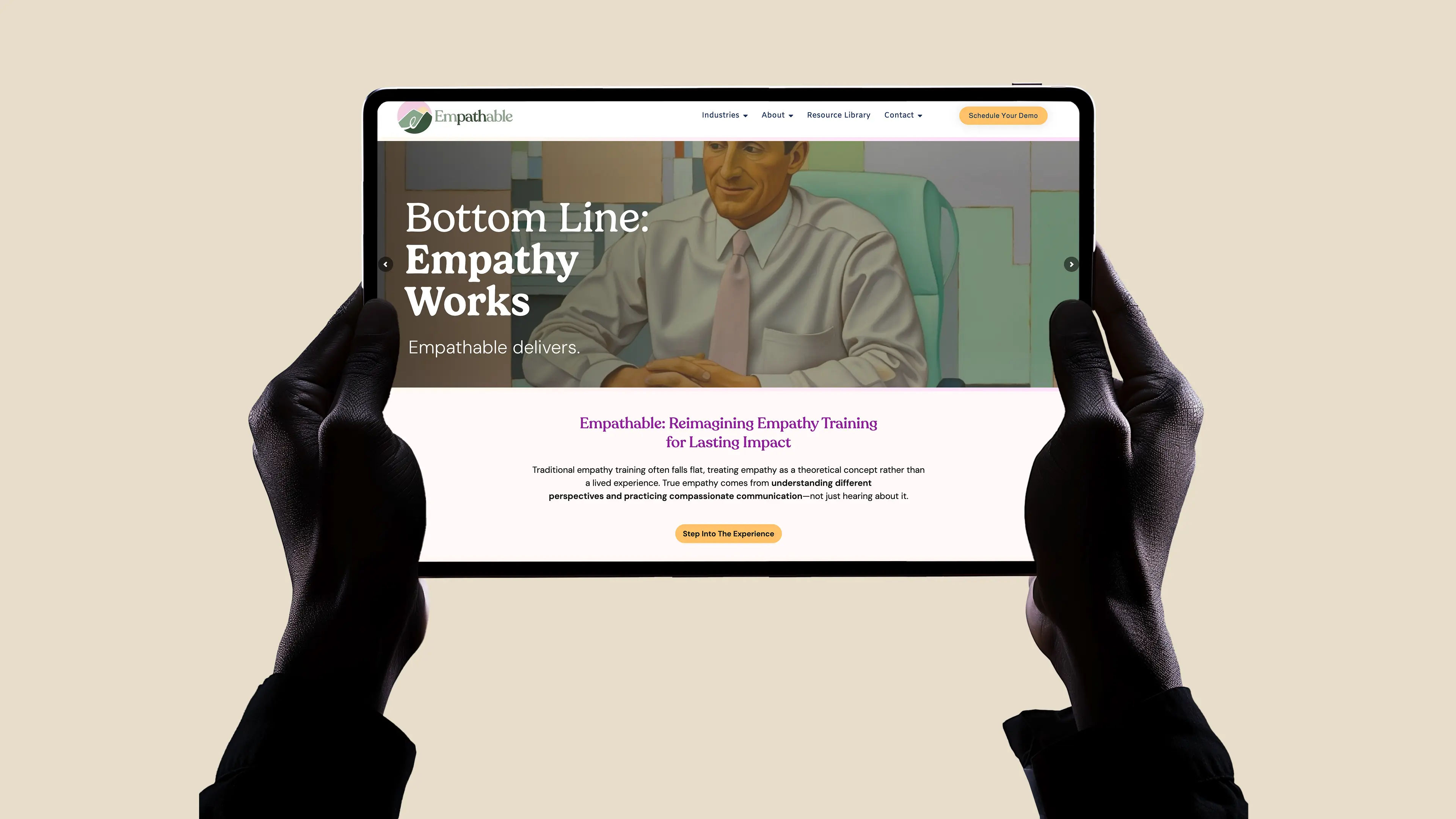
Empathable
EmpathablePX — an AI patient-simulation platform where clinicians rehearse high-stakes...