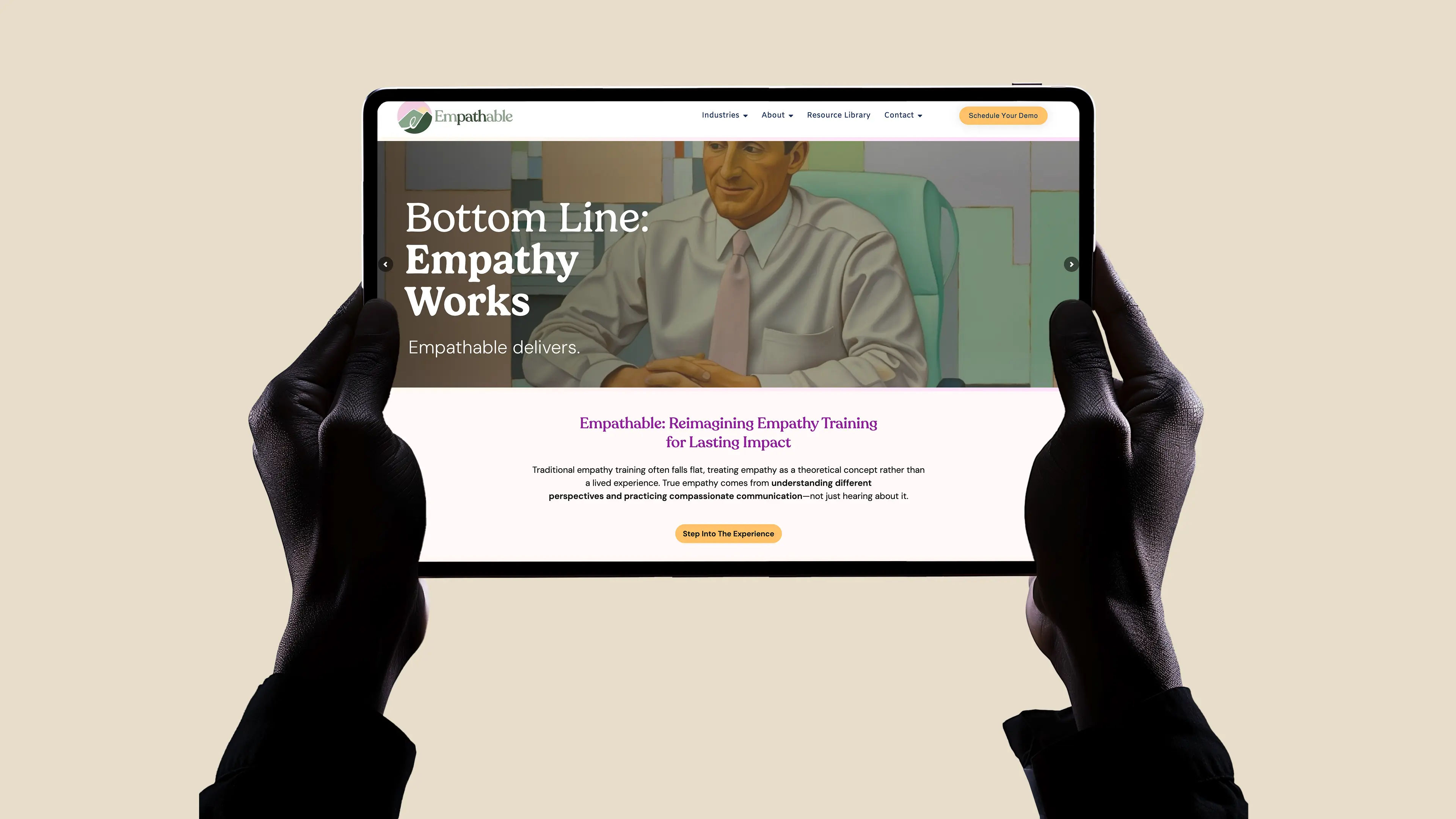
EmpathablePX
Empathable set out to fix a hard problem in healthcare education: communication skills are what patients remember, yet they are the hardest to practise safely. We partnered with Empathable to build EmpathablePX — an AI-powered platform where clinicians rehearse difficult patient conversations with realistic AI-simulated patients, by text or by voice, and receive objective, clinician-validated feedback on how well they communicated.
YEAR
2026
CLIENT
Empathable
SCOPE
PLATFORM
Web (Responsive)
The Challenge
Clinical communication is high-stakes and unforgiving — a rushed breaking-bad-news conversation or a missed cue can change a patient's outcome, yet the only way to practise has traditionally been role-play with paid actors: expensive, hard to schedule, inconsistent, and impossible to score objectively. Empathable needed a platform that could simulate patients believably enough to be worth practising against, in both text and live voice, while producing feedback rigorous enough for clinicians to trust. The technical challenges were substantial: orchestrating two different AI modalities (Google Gemini for text, Hume's Empathic Voice Interface for voice) behind one coherent experience; keeping each simulated patient consistent in personality, medical history, and emotion across a whole conversation; and — hardest of all — turning a free-flowing human conversation into a defensible, reproducible score that agreed with how expert clinicians actually assess communication.
Our Solutions
We built EmpathablePX as a single platform with several purpose-built modules — each solving one part of the communication-training problem, and together forming a complete loop from realistic practice to objective, clinician-validated feedback.
AI Patient Simulator
Realistic practice, zero risk
The heart of EmpathablePX. Clinicians converse with AI-simulated patients that stay in-character across the entire session — consistent medical history, personality, and emotional state. Supports both text-to-text (Google Gemini) and real-time voice-to-voice (Hume Empathic Voice Interface), so learners can type through a scenario or speak to a patient who responds with natural, emotional speech.
Scenario Engine
Hydrated patient personas
Every scenario fuses clinical context with a fully-realised patient persona — history, temperament, and emotional baseline. This “hydration” is what makes simulated patients believable enough to be worth practising against, and lets Empathable scale from routine check-ups to breaking bad news and mental-health crises.
Communication Scoring Engine
Objective, clinician-validated
After each session, EmpathablePX produces a Patient Communication Score (PCS) built from capstone-validated sub-criteria. A clinician-aligned score is the source of truth shown to learners; AI is used to detect communication behaviours in the transcript rather than to pass subjective judgement — keeping scores reproducible and defensible.
Staff-to-Staff Handoff
Practising the human relay
A dedicated mode for the conversations that happen between clinicians, not just with patients — structured clinical handoffs where information loss is a real patient-safety risk. Teams rehearse the handoff and get scored on completeness and clarity.
Progress & Analytics
Seeing skills grow
Per-session feedback, a progress tracker, a resilience module, and a leaderboard turn practice into measurable improvement. Interactive charts visualise how communication scores develop over time, for both individual learners and their organisation.
Our Approach
Clinician-validated scoring first
We designed the scoring rubric around how expert clinicians actually assess communication — capstone-validated sub-criteria and a clinician-aligned score — before writing a line of AI prompting, so the numbers would earn trust.
Dual-modality by design
Rather than bolt voice on later, we architected text (Gemini) and live voice (Hume EVI) as first-class, interchangeable modes behind one session model.
Firebase-backed, real-time
Auth, scenario data, sessions, and scores run on Firebase (Firestore + Cloud Functions), giving Empathable a secure, real-time backbone and a fast path from idea to shipped feature.
Built with clinicians in the loop
We iterated against real healthcare-provider feedback, tuning scenarios and scoring against how practitioners actually communicate.
Under the Hood
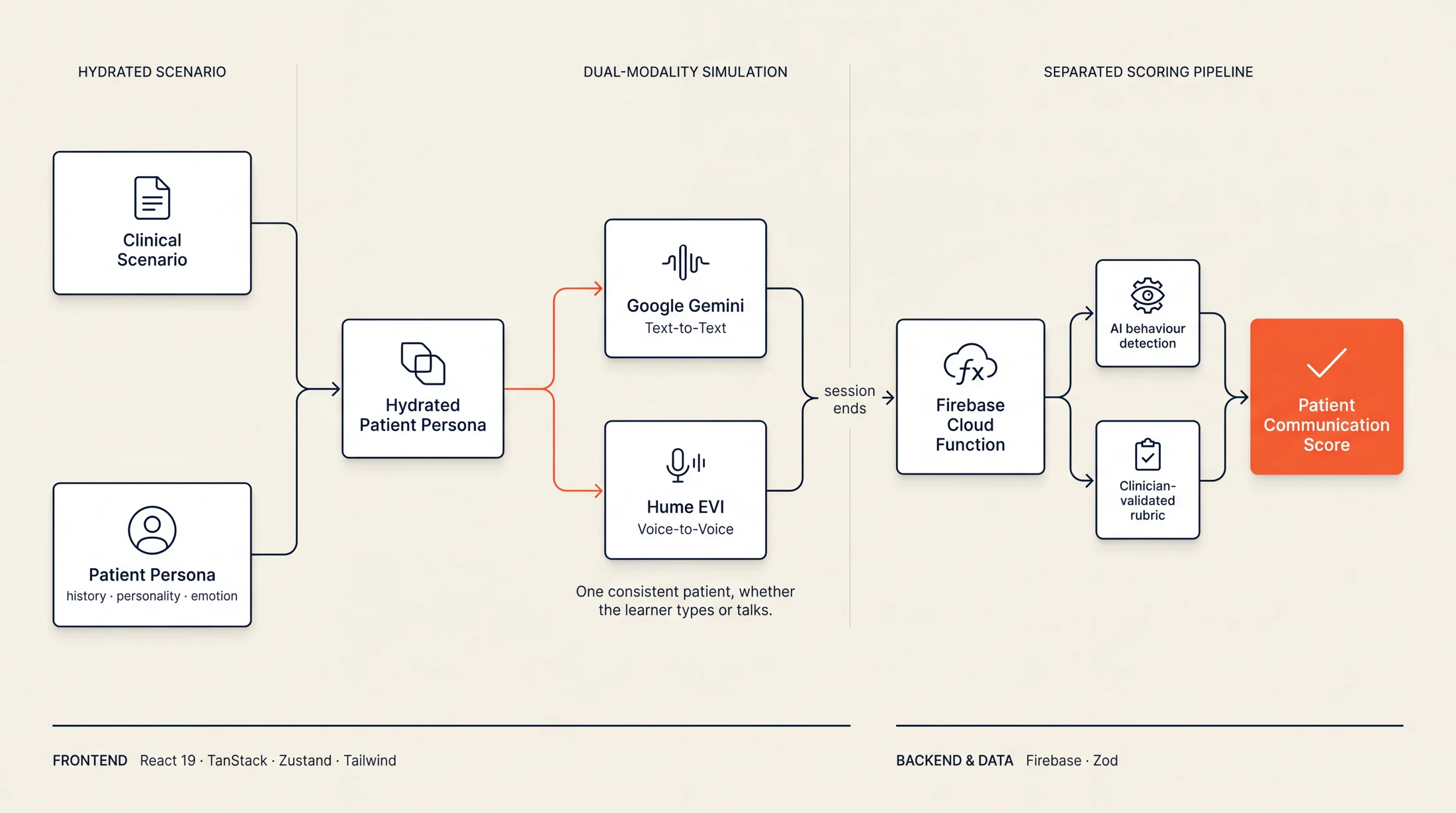
At the heart of EmpathablePX is a dual-modality simulation architecture. Every scenario is “hydrated” — clinical scenario data fused with a full patient persona of history, personality, and emotional state — into a single model that both the text engine (Google Gemini) and the live voice engine (Hume's Empathic Voice Interface) speak from, so a simulated patient stays consistent whether a learner types or talks. Scoring is deliberately separated from generation: when a session ends, a Firebase Cloud Function analyses the transcript — using AI to detect communication behaviours while a clinician-validated rubric turns those signals into a reproducible Patient Communication Score. Around that core sits a modern, real-time web foundation — React 19, TanStack, and Firebase — organised feature by feature so simulation, handoff, scoring, and analytics can evolve independently.
Outcomes
EmpathablePX went from concept to a working platform built around how clinicians actually communicate. The partnership exemplifies how we work with Empathable — not shipping features in isolation, but building a product together and refining it against real clinical feedback.
Key Deliverables
- -Dual-modality AI patient simulator — text (Google Gemini) and live voice (Hume EVI) in one experience
- -Hydrated scenario engine giving every simulated patient a consistent history, personality, and emotion
- -Clinician-validated Patient Communication Score (PCS) with reproducible, defensible feedback
- -Staff-to-staff handoff simulation for the high-risk conversations between clinicians
- -Progress tracking, resilience, and leaderboard modules with skill-growth analytics
- -Delivered on a modern, real-time stack (React 19, TanStack, Firebase) with a scoring model validated against clinician judgement
Other Case Studies
Speed Machine
A direct-to-customer insurance platform that integrates leading insurer APIs so people can...

Advantage
A multi-tenant insurance benefits portal PrishaPolicy offers to its corporate clients,...

Vantage
An internal insurance operations platform built for PrishaPolicy, unifying sales, policy...
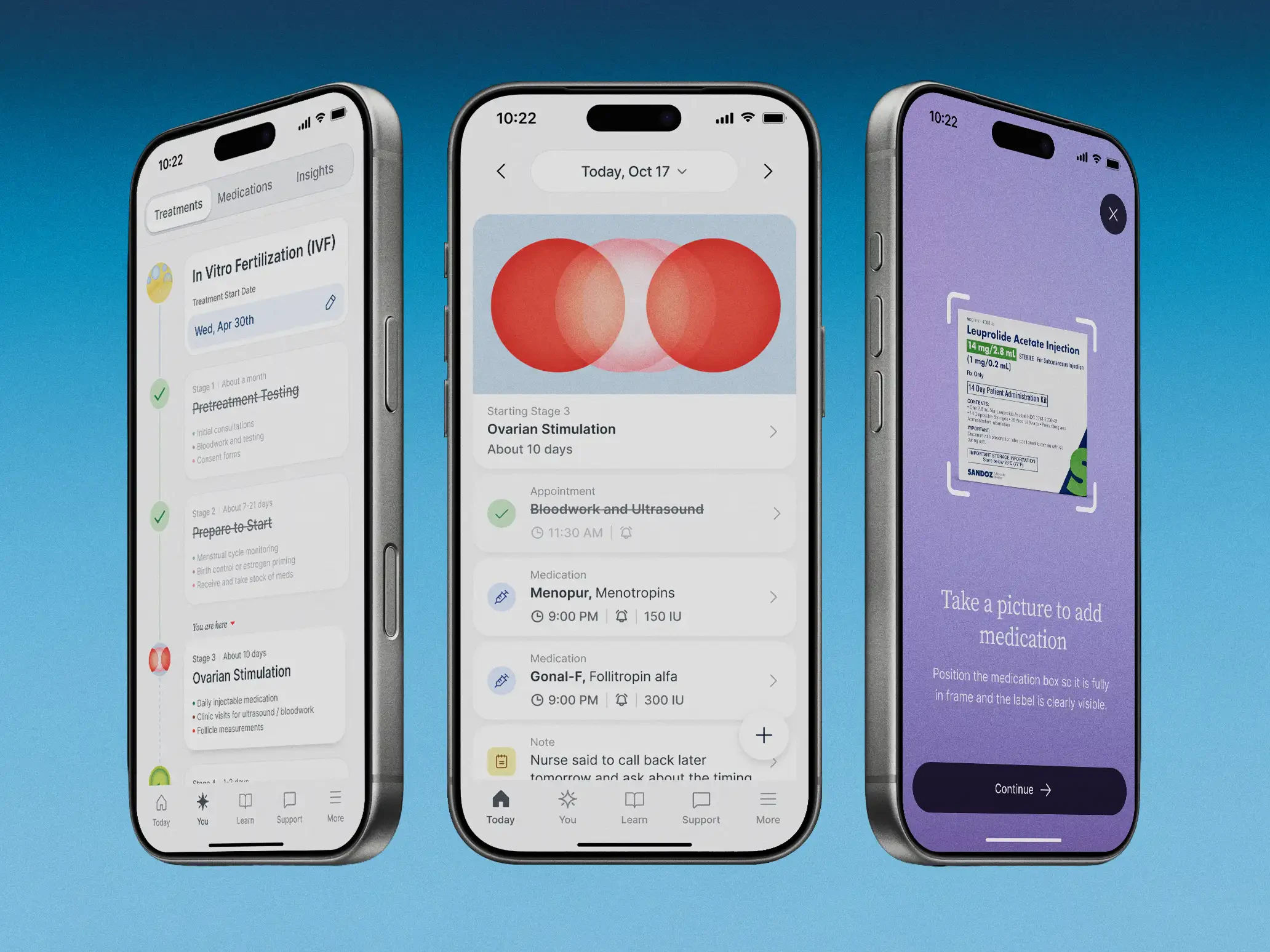
Prisha Policy
Empowering a prominent insurance broker to safeguard client assets and liabilities through...

Centuro Global
An Angular platform and its AWS infrastructure for a compliance SaaS operating in 170+...

Akoya
An AI itinerary planner built on text-davinci-003 in early 2023 — templated prompts,...

TellGo
An eSIM store on Medusa, migrated off a single supplier while live — the supplier we moved...

BillMart
Providing comprehensive trade finance solutions through Working Capital Loans, Channel...
H&S Store
An online store for a Kuwaiti electronics retailer, kept in step with the ERP, the...