I’ve been thinking about where my design ideas actually come from. Most of them don’t start with a brief or a Figma file. They start with something small I notice, get curious about, and eventually want to make something from.
This flower was one of those things.
It started with flowers
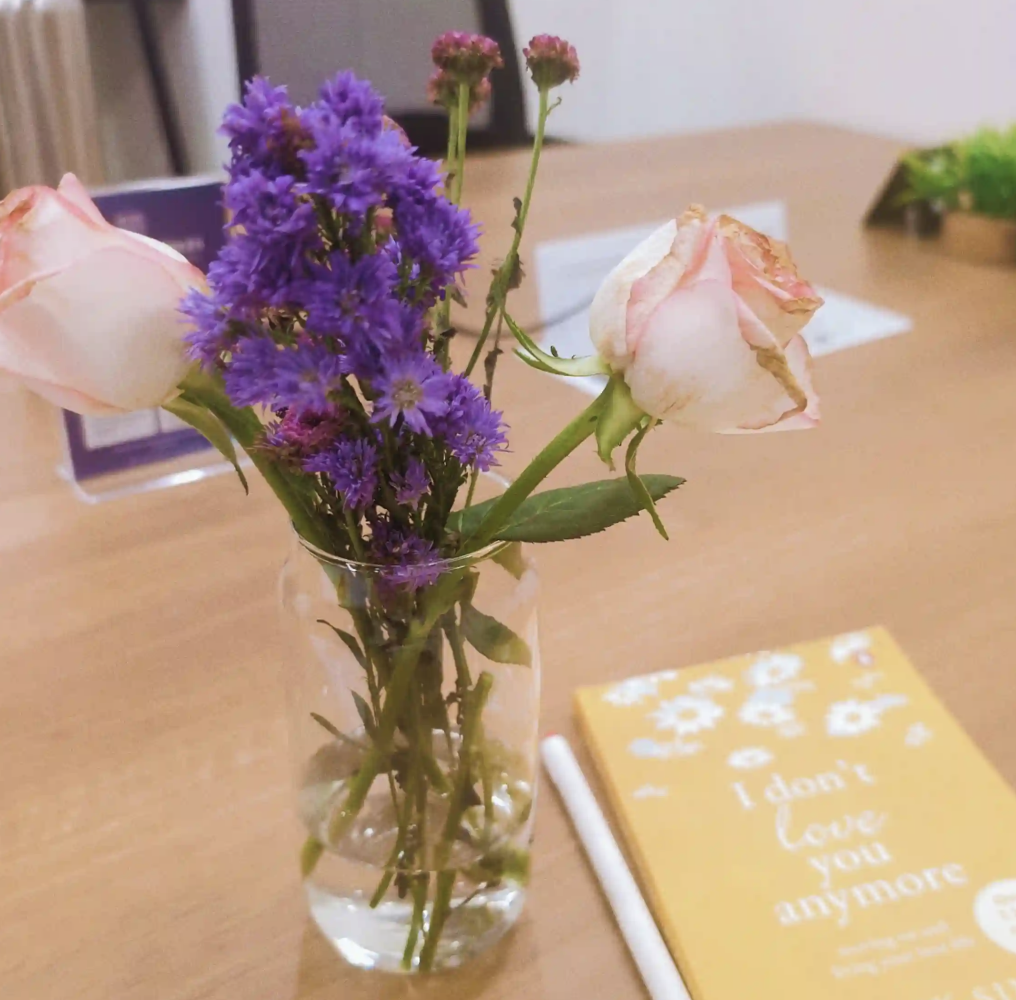
I love flowers. I love buying them, receiving them, and most of all, giving them. It doesn’t need to be a birthday or an anniversary. Sometimes I just see a bunch of flowers and think of someone: You would like these So I buy them.
I also started buying flowers for myself and keeping them on my desk. My first vessel wasn’t really a vase. It was a small vessel with a stick in it, and I couldn’t put water inside. So whenever I bought flowers, I would put them there anyway.
They looked good for a while. Then they slowly dried out, and eventually, they died.
I didn’t think much about it at first.
Then one day, a friend who had received flowers from me told me, “You should put some water in it. The flowers will last much longer.”
They knew because they had been doing the same thing with the flowers I had given them. I hadn’t even thought about it.
Later, my sister gave me a new vessel. This one could actually hold water. So I filled it, put the flowers inside, and kept it on my desk.
And they lasted much longer.
Then I started noticing
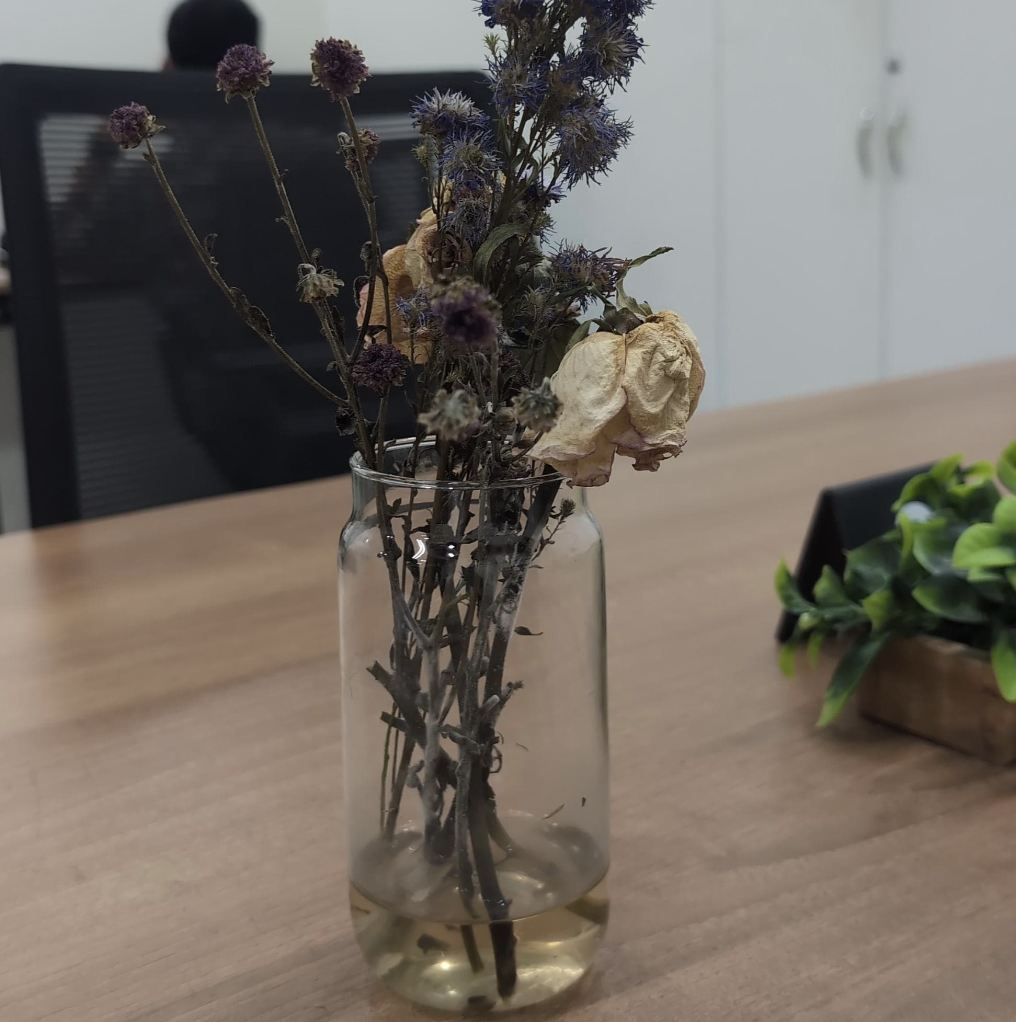
Having flowers on my desk became a small part of my everyday routine. I would see them while working, and slowly, I started noticing how much they changed.
A flower that was standing straight yesterday would start bending. A bud would open. The petals would change shape. The colours would become softer. Some flowers would open completely while others started closing. Eventually, they would dry and disappear.
Nothing particularly interesting was happening. It was just a flower. But I kept looking at it.
I think this is something I naturally do as a designer. I notice things. Sometimes it’s a visual detail, sometimes it’s an interaction, sometimes it’s something physical, and sometimes it’s just a small moment that makes me wonder why something works the way it does.
Most of those observations go nowhere. But some of them stay in my head.
The flower stayed.
The part before the design
When we talk about design, we usually talk about the visible part: the research, the moodboard, the wireframes, the Figma file, the prototype, and the final interface.
But there’s usually something that happens before all of that.
At least for me, it might be a random thought, a screenshot I save, something I see while walking, a conversation, a problem I experience, a shape I find interesting, or something as simple as a flower changing on my desk.
I don’t immediately think, *This should become a website.*
I just notice it.
Then I become curious.
Then I start asking questions.
And sometimes those questions eventually turn into something I want to make.
I collect questions
I use Pinterest, Awwwards, moodboards, and references like most designers do. But I’ve realised that I’m often more interested in the question behind a reference than the reference itself.
Why does this interaction feel good? Why does this page feel calm? Why does this animation make me want to keep watching? Why does this object feel interesting? Why does something feel alive even though it’s static?
Those questions are more useful to me than simply saving the thing.
A reference can influence a design, but a question can lead you somewhere completely different.
What happened with the flower
The more I watched the flower change, the more I became interested in the process. I wasn’t only interested in how the flower looked when it was fresh. I was interested in everything that happened afterwards: the blooming, the bending, the changing colours, the drying, and the disappearing.
Eventually I started thinking:
What if I could recreate that digitally?
Not just show a flower, but create something that changes with it.
That was the beginning of the project.
Not a design brief. Not a client request. Just an observation that I kept thinking about.
Making is part of thinking
This is something I’ve started to understand more about my own process. I don’t always make things because I already know exactly what I want to make. Sometimes I make something to figure out what I think.
I’ll sketch something, build a rough prototype, try an interaction, throw away a version, and make another one. Sometimes the first version tells me more than an hour of thinking could.
You can imagine something in your head and think it’s going to be great. Then you build it and immediately realise, Nope.
That’s useful too.
Now I know what doesn’t work.
Making things helps me think.
AI has changed how I explore
AI has also become part of this process for me. Not as a replacement for design, but more as a way to explore ideas faster.
Sometimes I have a visual idea that I can’t quite explain. I can describe it to an AI and see what it gives me. Sometimes I use it to generate visual directions. Sometimes I use it to explore an interaction or build a small experiment. Sometimes I just throw a weird idea at it.
The result is often not what I imagined.
But that’s actually useful.
I can look at it and think, No, not this. Or, Wait, this part is interesting.
That reaction gives me somewhere to go.
Before AI, I might have kept an idea in my head for days because I couldn’t figure out how to express it. Now I can get a rough version in front of me much faster.
It doesn’t give me the final answer. It gives me something to react to.
And sometimes that’s all I need to keep going.
Not everything needs to become a project
I think there’s also a temptation, especially as a designer, to turn every interesting thing into something.
You notice something and immediately think, Can I make a website from this?
Sometimes the answer should just be no.
Some things are worth noticing without turning them into a project. A flower can just be a flower. A nice interaction can just be a nice interaction. A conversation can just be a conversation.
But occasionally, something stays with you. You keep thinking about it. You start seeing it differently. You want to understand it. And eventually, you want to make something from it.
That’s when it becomes interesting to me.
The flower became a digital vessel
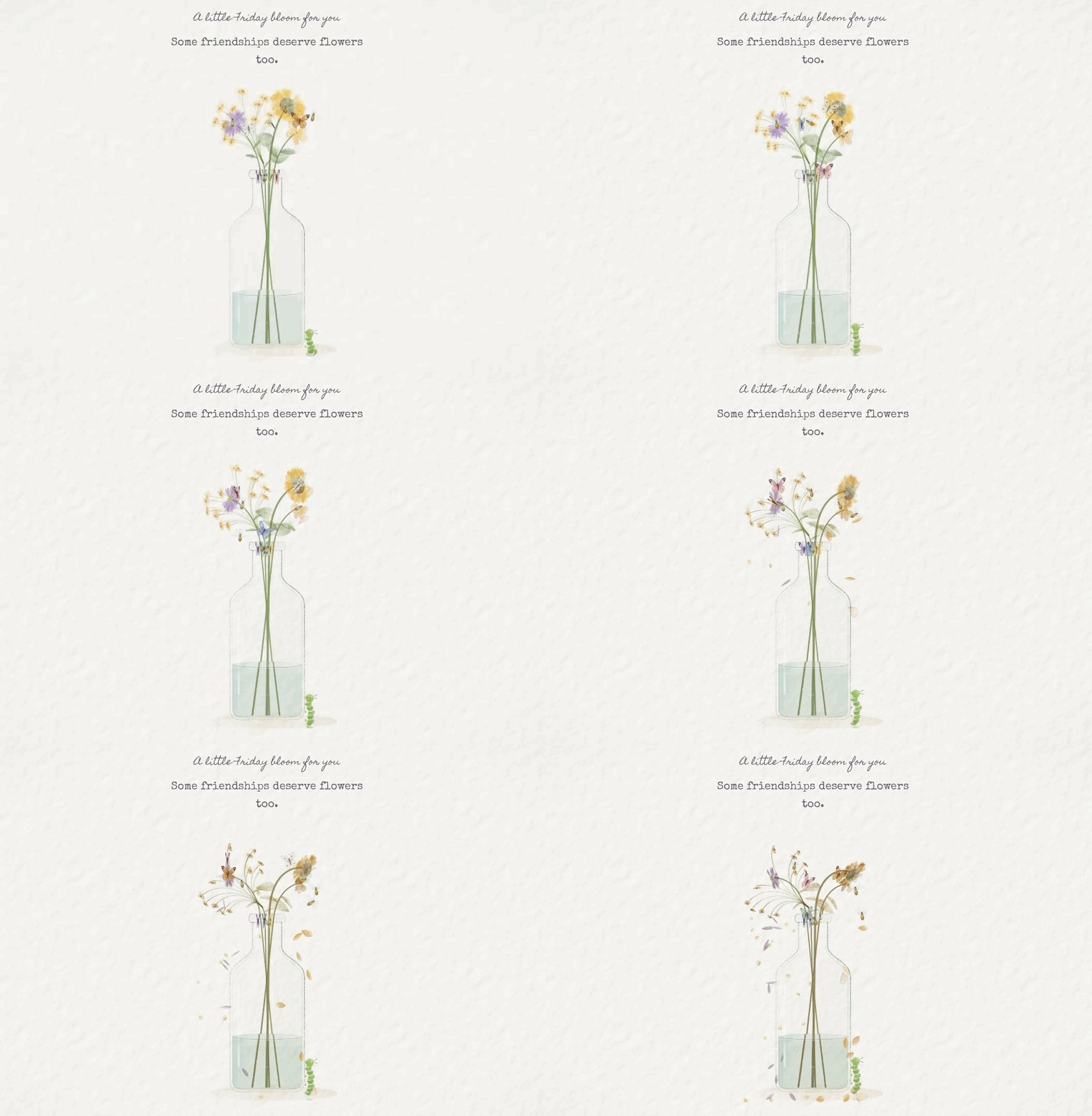
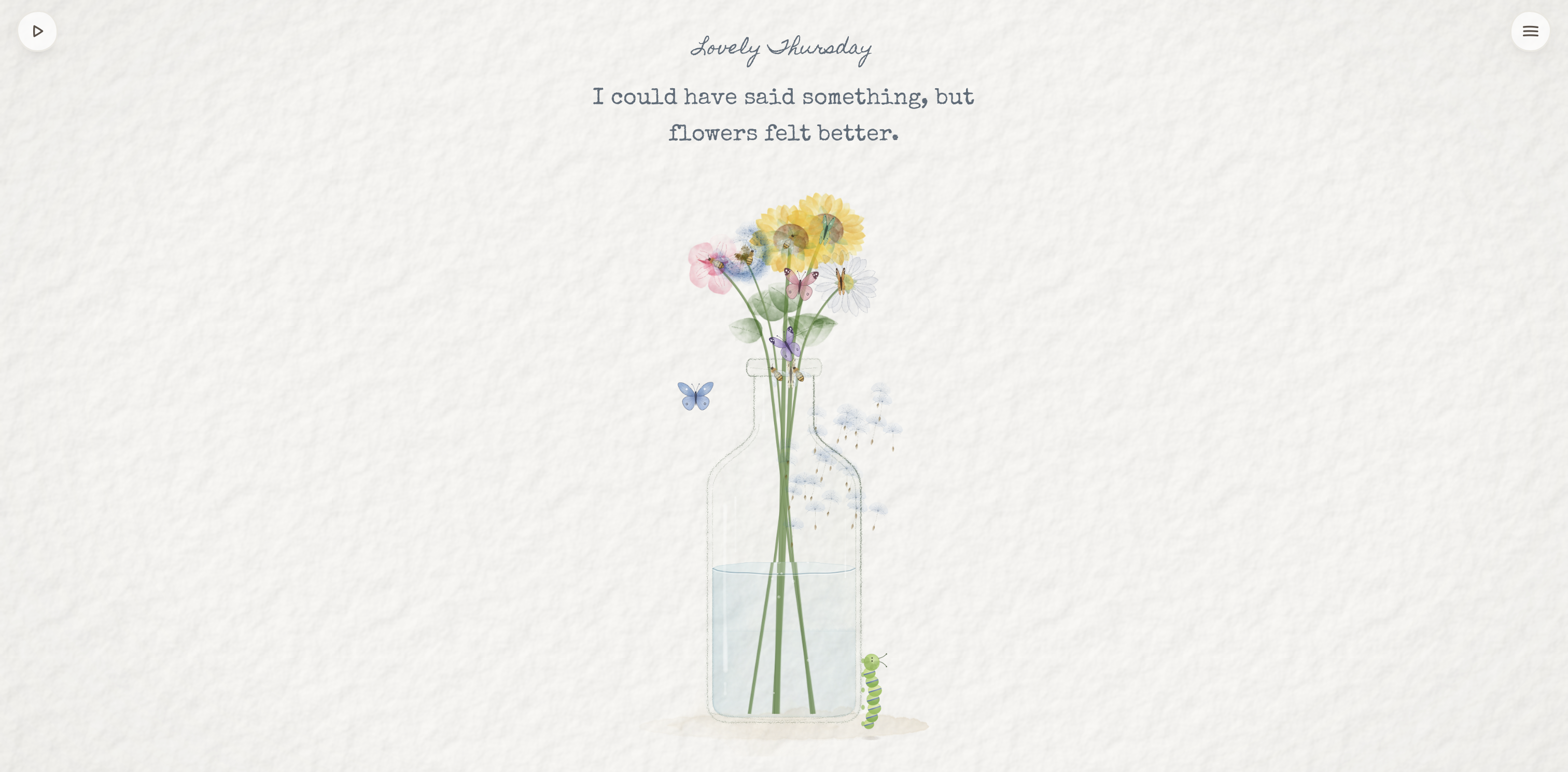
Eventually, I built a digital version of the vessel that had been sitting on my desk.
A flower lives inside it. It goes through different stages. It blooms, changes, dries, and slowly disappears.
You can see the project here →
It’s a small digital interpretation of something I had been watching in real life.
The interesting part, for me, isn’t really the final website. It’s the chain of things that happened before it.
I bought flowers. I put them on my desk. I watched them change. I became curious about those changes. That curiosity became a question. The question became an experiment. And the experiment became a design.
This is the part I want to explore more
I’ve shared a lot of finished work over the years: here’s what I built, here’s the website, here’s the animation, here’s the new project.
But lately, I’m more interested in everything that happens before that.
The little things that influence what I make. The things I notice. The questions I keep asking. The references I collect. The things I sketch. The experiments that fail. The random ideas I test with AI. The conversations that change how I think. The things I build just because I’m curious.
A lot of that never makes it into a portfolio. But I think that’s where a big part of the creative process actually happens.
Before it becomes a design
I don’t think designing is only about knowing how to use Figma, write code, create interfaces, or make things look good.
For me, it’s also about paying attention. Being curious about ordinary things. Asking questions. Trying things. Making something before I’m completely sure what it should be. Looking at it. Changing it. Breaking it. Trying again.
Sometimes the final thing has very little resemblance to where it started. And that’s okay.
The starting point might be a flower, a conversation, an interaction, a problem, or something I saw for two seconds and couldn’t stop thinking about.
I’m becoming more interested in that part of the process.
The moment before something has become a design.
Because maybe that’s where my work really begins.
Not when I start designing, but when I notice something and think:
“That’s interesting. I wonder what I can make from it.”
.webp)